

- Home
- Cataract
Cataract
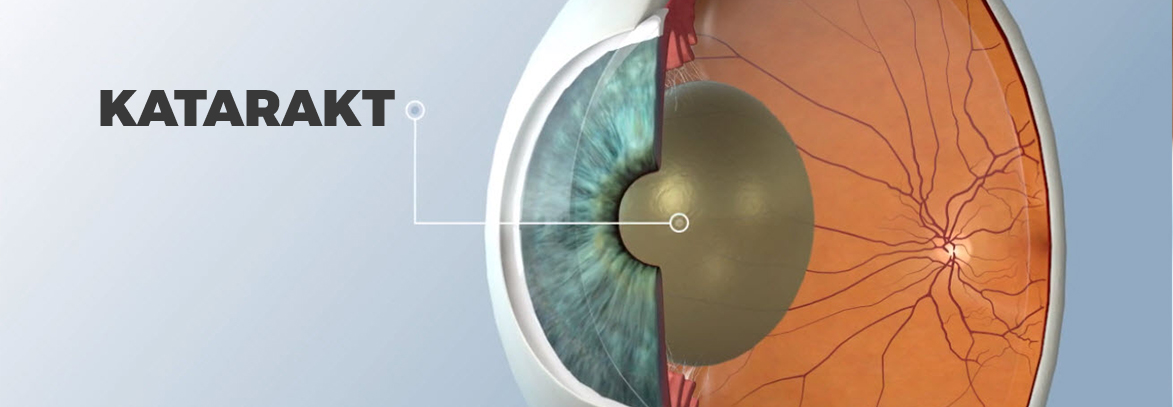
What is cataract?
Normally, the eye lens is transparent. It focuses the image onto the retina, allowing us to see clearly. In cataracts, the lens loses its natural transparency and becomes opaque, preventing the image from falling onto the retina or causing blurry vision. In the early stages of cataracts, it begins with slight blurring, fading of colors, and scattering of light. As the cataract progresses, the patient complains of increasingly blurred vision. This blurriness, unlike that in refractive errors that can be corrected with glasses, cannot be corrected with glasses. In some cases (as in nuclear cataracts), due to newly developed myopia, the patient may be able to read better up close without glasses, but this is temporary. As the cataract progresses, both distance and near vision decrease. In some specific types of cataracts (such as posterior subcapsular cataracts), the patient experiences more discomfort, especially in sunlight, while driving, and when looking at close objects. Reduced vision causes difficulty in driving, reading, etc., and impairs quality of life. The degree of vision loss varies depending on the location, size, and grade of the cataract.
Cataracts are the most common cause of treatable vision loss and usually occur with age, in later life. However, they can occur due to many reasons, including congenital, traumatic, drug-induced, or secondary to systemic and eye diseases.
How are cataracts diagnosed?
Cataracts can be diagnosed through an examination by your ophthalmologist. This examination determines the type, density, location, and degree of vision reduction of the cataract. The retina and macula are examined using pupil dilation. Intraocular pressure is measured. Optical coherence tomography (OCT) is performed to evaluate the back of the eye. Accompanying conditions such as macular degeneration, glaucoma (high eye pressure), uveitis, and pterygium (a growth on the eye) are identified. If the cataract is advanced and completely white, and we cannot see behind the lens, then an eye ultrasound (USG) is performed to check for tumors, vitreous hemorrhages, or retinal detachment. If surgery is decided upon based on the results of these examinations, measurements are taken to determine the appropriate artificial lens power and type to be implanted.
Cataract Treatment
Cataract treatment is surgical, and when performed at the right time and with the appropriate method, the success rate is high. Phacoemulsification surgery is performed under topical anesthesia. This surgery is performed through a very small incision and is sutureless. If cataract treatment is delayed, the cataract hardens, therefore timing of surgery is crucial.
In very advanced cases, the older sutured method can be applied. In both cases, the goal of cataract surgery is to remove the opaque natural lens and replace it with an artificial intraocular lens. In some cases, combined surgery (performing two surgeries simultaneously) may be necessary in the presence of concomitant diseases such as macular degeneration, glaucoma (high eye pressure), uveitis, or pterygium (a growth on the eye).
How is an artificial lens selected for cataract surgery?
After examination, a toric and/or monofocal, bifocal (extended) or trifocal intraocular lens may be selected depending on the structure of the eye, the presence of additional diseases such as glaucoma, and the presence of astigmatism. The correct lens is the one that is suitable for the patient’s eye. When choosing a lens, you should make a decision by evaluating the options in detail with your ophthalmologist, taking into account the balance between the suitability of your eye and your lifestyle.
In conclusion, the timing, method of cataract surgery, and lens selection are determined “INDIVIDUALLY” based on the results of your examination; they may vary depending on the structure of the eye and the presence of additional diseases.
*The content of this page is for informational purposes only. For diagnosis and treatment, please consult your doctor.
Cataract
Neque porro est qui dolorem ipsum quia quaed inventore veritatis et quasi architecto beatae vitae dicta sunt explicabo. Aelltes port lacus quis enim var sed efficitur turpis gilla sed sit amet finibus eros. Lorem Ipsum is simply dummy text of the printing and typesetting industry.